Concrete Sealing in Doral, FL
In Doral, concrete gets hit with strong sun, daily summer storms and sprinkler water almost every day of the year. We seal concrete in Doral, FL so driveways, pool decks and patios resist stains, mildew and fading and are easier to keep clean.
Why concrete wears quickly in Doral
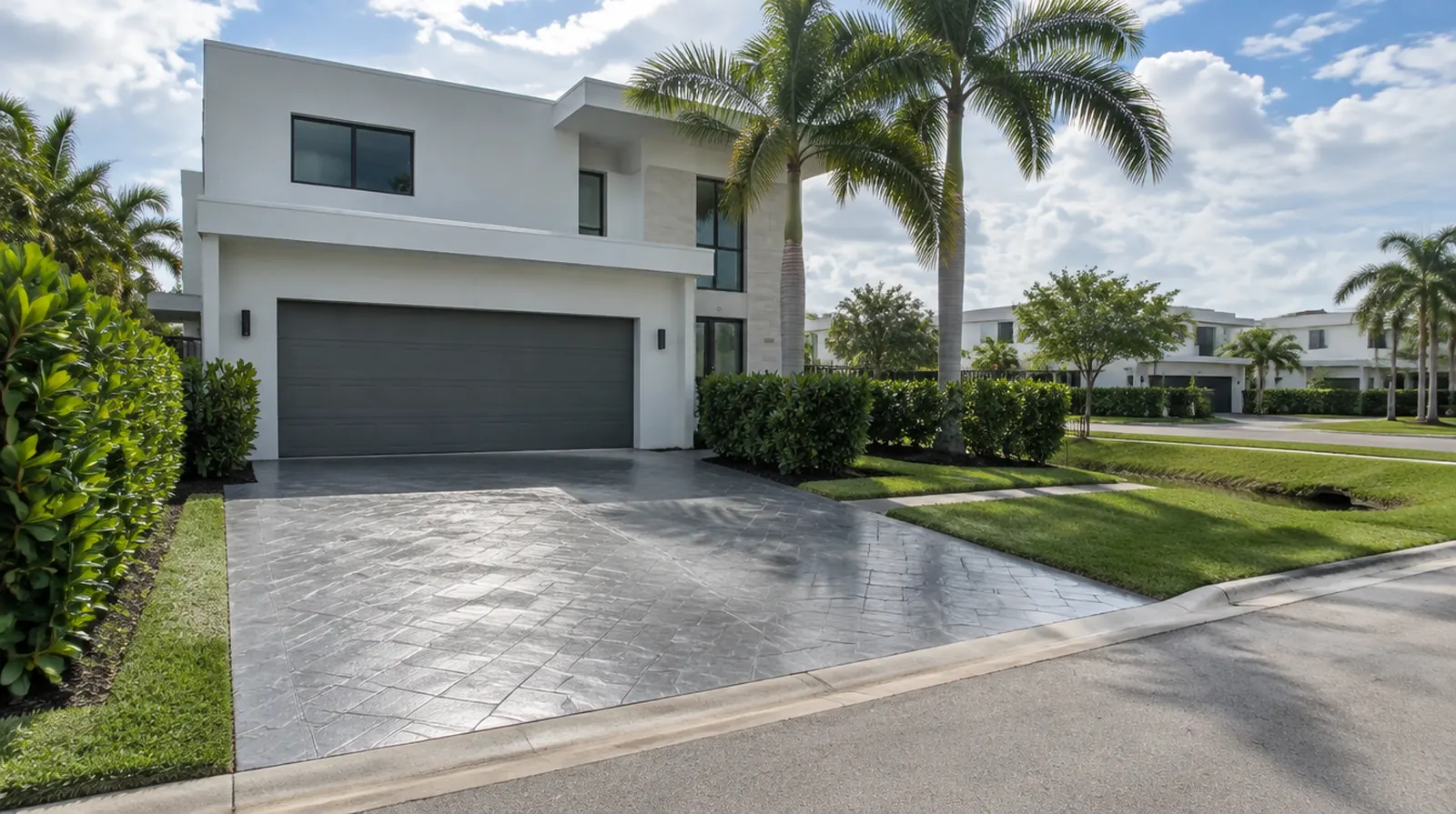
Doral is flat, low and sunny. Neighborhoods like Doral Isles and the newer blocks around Downtown Doral are full of driveways, walkways and pool decks, and many homes use stamped concrete or pavers for curb appeal. Just east, the warehouses and distribution centers near the airport have acres of loading aprons and sidewalks. All of that concrete deals with the same climate.
Ultraviolet light fades color in stamped and stained surfaces. The rainy season, roughly June through October, soaks slabs almost every afternoon, and the high water table keeps the ground wet. Shaded areas grow black mildew and algae. Irrigation from wells can carry iron that leaves orange rust stains along driveways and walls. Bare concrete absorbs all of it.
What sealing does
A sealer slows water and stains from getting into the concrete. Depending on the type, it can also deepen color, add a light sheen and make cleaning easier. Sealing does not fix cracks or sunken sections. For those, see our concrete repair and leveling work first, then seal.
Sealer types we use
Penetrating sealers. Silane and siloxane products soak in and repel water without changing the look much. They are a good choice for broom-finish driveways and sidewalks.
Acrylic sealers. These form a thin film on the surface and bring out color. Most stamped and stained concrete uses an acrylic, often in a solvent or water-based formula. They need to be reapplied every few years in our sun.
Slip-resistant additives. On pool decks and steps, we mix a fine grit into the final coat so wet surfaces stay safer.
How a sealing job works
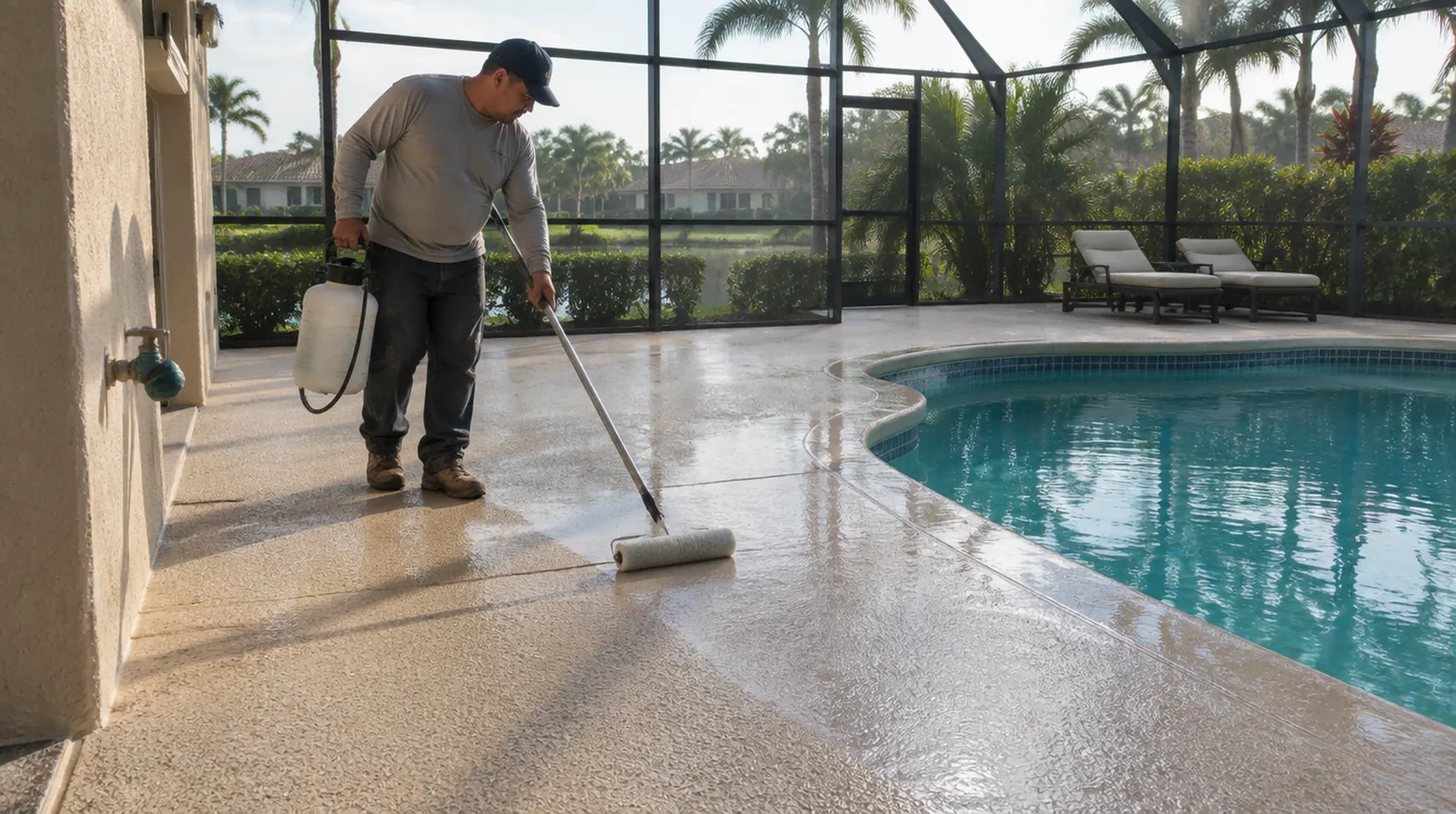
- Test the surface. We check whether there is an old sealer, what kind it is, and whether it is peeling or cloudy.
- Clean. Pressure washing removes dirt and mildew. Rust and efflorescence get a dedicated cleaner. Tire marks and oil are treated separately.
- Strip if needed. Old, failed acrylic that has turned white or flaky gets stripped, or the new coat will look blotchy.
- Dry time. The slab must dry before sealing. In summer, that often means sealing in the morning after a dry night.
- Apply. Sprayer and roller in thin, even coats. Two light coats look better and last longer than one heavy one.
Stamped driveways and pool decks
Stamped concrete in Doral is everywhere, and it is usually the first surface to look tired. Faded color, a hazy white film and mildew in the grooves are common. A good cleaning and a fresh color-enhancing sealer brings much of the original look back. See our stamped concrete page for new installs. Pool decks need a breathable sealer that will not trap water or turn slick, and the grit additive is a must. Our concrete pool decks page explains deck options.
Why sealed concrete sometimes turns white
A milky haze on sealed concrete is usually moisture trapped under a film-forming sealer, often because it was applied to a damp slab or put on too thick. In a humid place like Doral, that is easy to do. We avoid it by checking moisture, applying thin coats and choosing breathable products where water comes up from below.
Sealing before and after storm season
Many homeowners like to seal in late spring, before the rains settle in, so the surface sheds water and mildew all summer. Late fall, after the wettest months, is the other good window, when the air is a little drier and slabs dry faster after cleaning. After a tropical storm, debris, sand and standing water can stain unsealed concrete quickly, and a sealed surface is much easier to wash down once the cleanup starts.
HOAs and businesses
Many Doral communities have HOA rules about driveway color and sheen. We can match existing colors and provide product data for approval. For warehouses and offices, we schedule around deliveries and seal aprons and walks in sections so the property stays open.
Common questions
How often should I reseal? Acrylics generally every two to three years here. Penetrating sealers can last longer.
Can you seal a new driveway? Yes, once the concrete has cured, usually about a month after the pour. Ask us when you book a concrete driveway.
Schedule a sealing visit
Call (786) 686-2124. We will check your concrete, test what is on it now and recommend the right sealer in writing.
Get a free estimate
Tell us what you want poured or what's cracking. We answer during business hours, usually the same day.
Form powered by Splitforms.